


Ajwa dates are a soft, dark variety grown around Madinah in Saudi Arabia, and among the most sought-after dates in India, especially during Ramadan. This guide covers what makes Ajwa special, what the research says about its benefits, how many to eat, what genuine Ajwa costs, and how to avoid fakes.
What are Ajwa dates?
Ajwa (also called Ajwa khajoor) is a date variety grown in the Al-Madinah region of western Saudi Arabia. The fruit is small to medium, round to oval, and almost black, with fine wrinkles on the skin.
The texture is soft but not sticky. The taste is gently sweet, less sugary than Medjool, with a rich, slightly prune-like depth. Ajwa ripens in summer, and the new season’s dates reach the market from around August.
Why Ajwa is special in Islamic tradition
Ajwa holds a deep connection with Madinah and the Prophet Muhammad (peace be upon him). A well-known hadith in Sahih al-Bukhari speaks of eating seven Ajwa dates in the morning. For many families, Ajwa is the date of choice to break the fast at iftar and to share as a gift during Ramadan and Eid.
Health benefits of Ajwa dates: what the research says
Ajwa dates are nutritious, but it is worth being honest about the evidence. Most studies so far are laboratory and animal studies, not large human trials. A 2017 scientific review in Trends in Food Science & Technology found Ajwa fruit and seeds rich in compounds with strong antioxidant activity, and called for more human research.
What Ajwa dates reliably offer:
- Natural, quick energy. Their natural sugars (mainly glucose and fructose) make them a traditional way to break a fast.
- Dietary fibre. Supports healthy digestion and helps you feel full.
- Minerals. Including potassium, magnesium and calcium.
- Antioxidants. Polyphenols and flavonoids, which help protect cells from damage.
Ajwa is a wholesome food, not a medicine. If you have diabetes or another health condition, ask your doctor how many dates suit you, because all dates are naturally high in sugar.
How many Ajwa dates should you eat a day?
For most healthy adults, 3 to 7 Ajwa dates a day is a sensible amount. Many people follow the tradition of seven in the morning, often on an empty stomach or with water. At iftar, one to three dates is the usual way to break the fast before the meal.
Ajwa dates price in India: what to expect
Genuine Ajwa costs more than common dates because it grows only in one region, the harvest is limited, and it is imported. Prices vary by size and grade:
| Grade | 250 g | 500 g | 1 kg | Best for |
|---|---|---|---|---|
| Ajwa Small | ₹360 | ₹680 | ₹1,300 | Daily eating, best value |
| Ajwa Regular (No. 3) | ₹480 | ₹920 | ₹1,780 | Family use |
| Ajwa Premium (No. 2) | ₹710 | ₹1,380 | ₹2,700 | Gifting, Ramadan |
| Ajwa Seedless | ₹610 | ₹1,180 | ₹2,300 | Children, recipes, convenience |
| Ajwa Rutab | — | ₹1,200 | — | A fresh, seasonal treat |
Prices as listed on occasionsdryfruit.com in November 2026. 100 g packs are also available. Check the product page for the latest price.
A price far below the market rate is the biggest warning sign of fake Ajwa.
How to spot genuine Ajwa dates
- Colour: deep black-brown, matte, never shiny or oily-looking. A strong shine can mean the dates were coated.
- Shape and size: small to medium, round to oval. Very long or very large “Ajwa” is usually another variety.
- Texture: soft and slightly dry to the touch, with fine wrinkles, not wet or sticky.
- Taste: mildly sweet with a rich depth. Very sugary or bland dates are a red flag.
- Source: ask the seller where the dates come from. Genuine Ajwa comes from the Madinah region of Saudi Arabia.
Why Occasions Ajwa is authentic
Occasions imports its Ajwa dates directly from Saudi Arabia as a licensed importer, with FSSAI licensing. Ajwa is the variety we import ourselves, so we know exactly where every box comes from. You can see and taste them before buying at our Mumbai stores on Clare Road, Nana Chowk and Kurla, or order online with pan-India delivery.
Ajwa dates for Ramadan and iftar
Ajwa is the most traditional date for breaking the fast. Its soft texture and gentle sweetness give quick energy without feeling heavy. For Ramadan, families usually buy a 500 g or 1 kg pack for the month. The Premium grade in a gift box is a popular Eid present.
See our complete guide to the best dates for Ramadan and iftar.
Easy ways to enjoy Ajwa dates
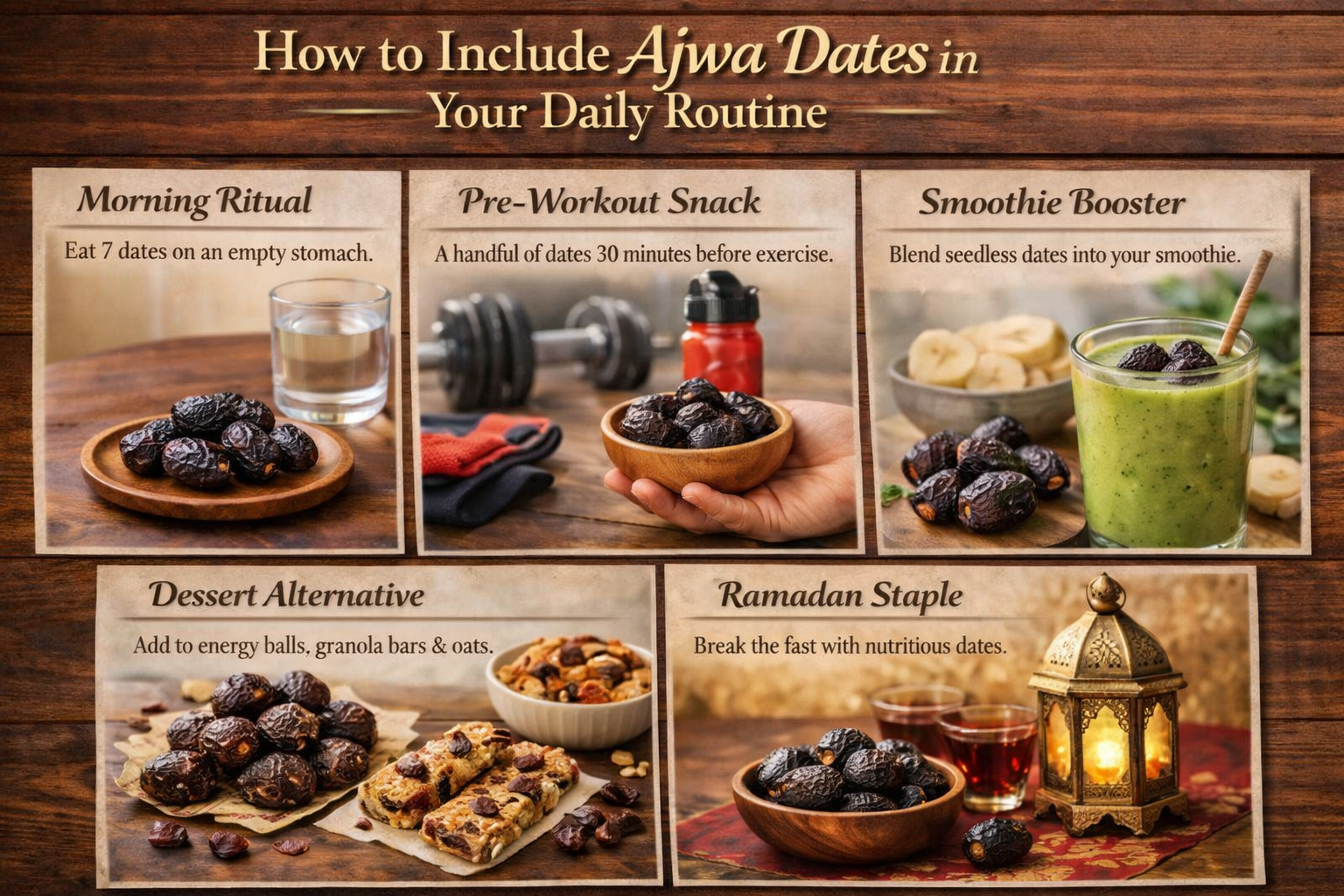
Eat them on their own in the morning, blend them into a milkshake, chop them into oats or yoghurt, or stuff them with almonds for a quick snack. Seedless Ajwa also makes easy energy bites and a natural sweetener for desserts.
Ajwa vs other dates
Still deciding? Compare Ajwa vs Kalmi and Ajwa vs Medjool.
Frequently asked questions
Are Ajwa dates good for health?
Yes. They are a natural source of energy, fibre, minerals and antioxidants. Eat them as part of a balanced diet.
Can diabetics eat Ajwa dates?
All dates are high in natural sugar. People with diabetes should check with their doctor before adding Ajwa dates to their diet.
Why are Ajwa dates so expensive?
They grow only around Madinah, the harvest is limited, and they are imported. Size and grade also affect the price.
How do I store Ajwa dates?
Keep them in an airtight container in a cool, dry place. Refrigerate them for longer freshness, especially in summer.
What is the difference between Ajwa and Ajwa Rutab?
Ajwa Rutab is picked at the fresh, softer stage. Regular Ajwa is the fully ripened, dried date.
Shop genuine Saudi Ajwa dates
- Premium Ajwa Dates – Authentic Saudi Khajoor
- Ajwa Seedless Dates
- Ajwa Regular (No. 3)
- Ajwa Small Dates
- Ajwa Rutab
Sources: Khalid et al., “A review on chemistry and pharmacology of Ajwa date fruit and pit”, Trends in Food Science & Technology, 2017 · Saudipedia: Ajwa Dates